The Real Lord's Day Defined
Before we trace the historical journey from Sabbath to Sunday, we must establish what Scripture itself declares about the "Lord's Day." The answer may surprise you.
"The Son of Man is Lord even of the sabbath."
— Matthew 12:8, Mark 2:28, Luke 6:5 (KJV)
This declaration by Jesus Himself—found in three of the four Gospels—asserts His divine authority over the Sabbath day. If Jesus is Lord of the Sabbath, then the Sabbath is the Lord's Day. This is not interpretation; it is the plain reading of Scripture.
But the evidence goes deeper. Even in His death, Christ honored the Sabbath so completely that He would not allow His followers to stumble:
"And that day was the preparation, and the sabbath drew on. And the women also, which came with him from Galilee, followed after, and beheld the sepulchre, and how his body was laid. And they returned, and prepared spices and ointments; and rested the sabbath day according to the commandment."
— Luke 23:54-56 (KJV)
Notice carefully: even after Christ's death, His followers "rested the sabbath dayaccording to the commandment." The commandment had not changed. The day had not changed. Christ Himself rested in the tomb on the seventh-day Sabbath—the same day He had blessed and sanctified at Creation.
So how did Christianity come to observe Sunday instead? The answer takes us on a journey through ancient Egypt, imperial Rome, and the corridors of papal power.
Part 1: Egypt's Sun God and the Pharaoh of the Exodus
Historical Context
The conflict between sun worship and Sabbath observance did not begin with Constantine. It stretches back to the very origins of Israel as a nation—in Egypt, under a Pharaoh whose identity and fate are deeply significant. To understand what happened to the Sabbath, we must first understand who sought to destroy it.
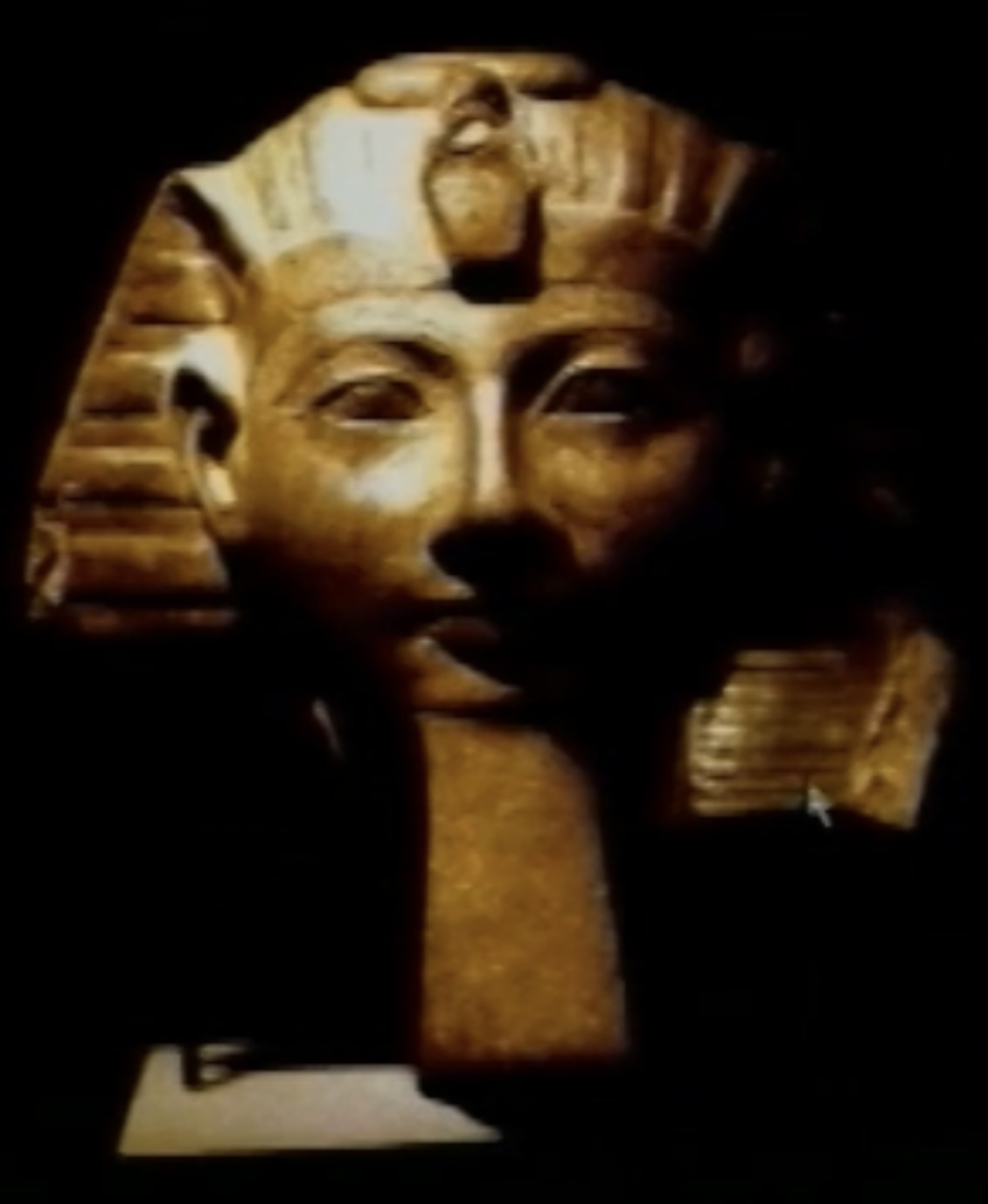
Tuthmosis III - The Pharaoh of the Exodus
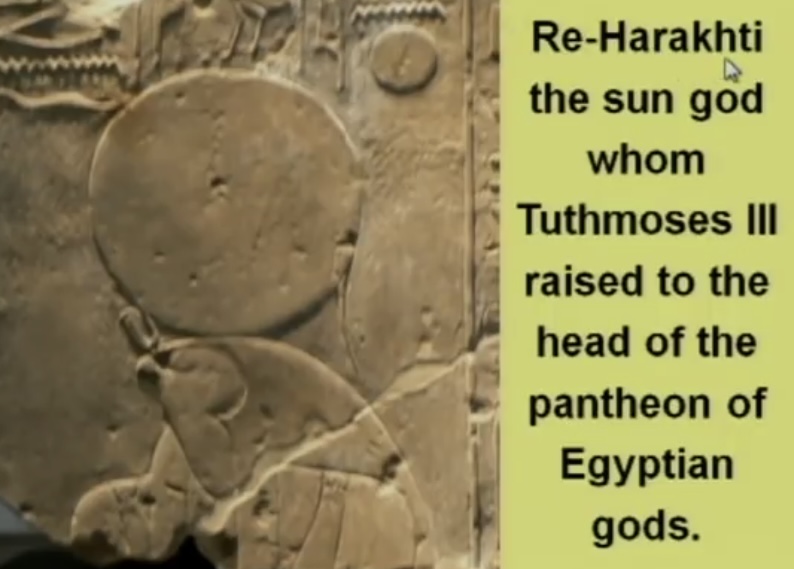
Re-Harakhti - The sun god elevated by Tuthmosis III
Tuthmosis III (also spelled Thutmose III) was one of Egypt's most powerful pharaohs—often called the "Napoleon of Ancient Egypt" for his military conquests. But he was far more than a military conqueror. He was an Amon priest—a goat worshiper devoted to the ram-headed god—and is credited with authorship of portions of the Book of the Dead, the ancient Egyptian equivalent of an occult bible.
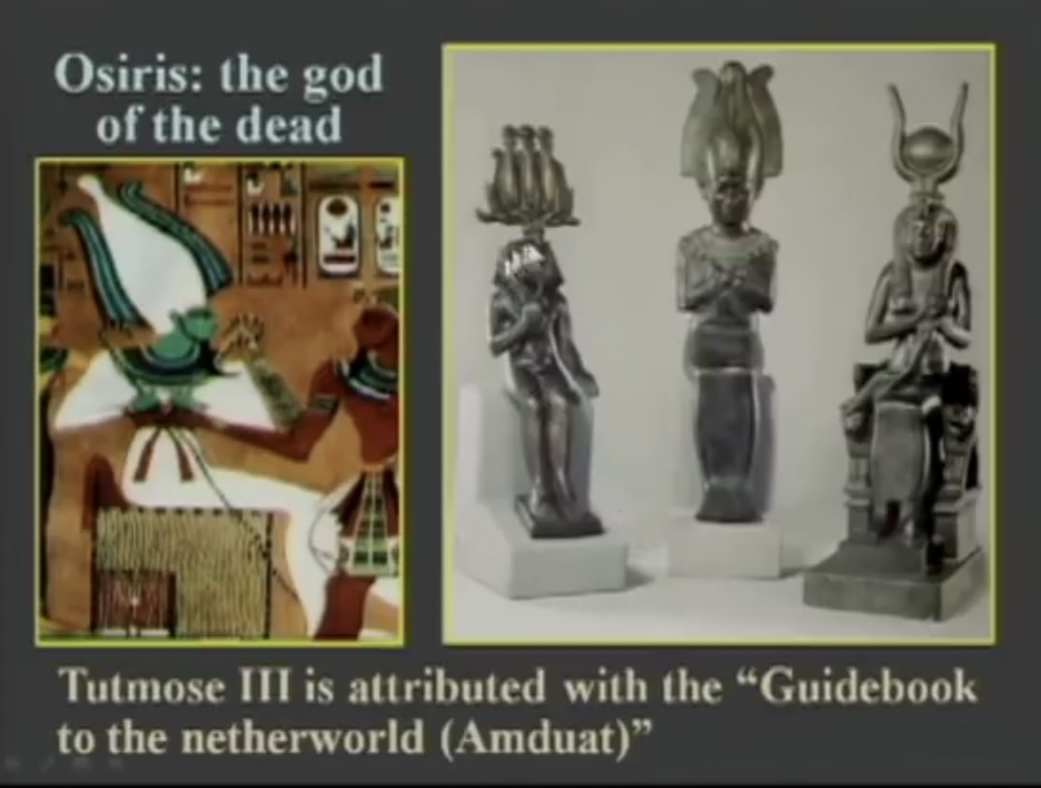
Osiris, the god of the dead. Tuthmosis III is attributed with the "Guidebook to the Netherworld" (Amduat)
Consider what this means: The Pharaoh who oppressed Israel was not merely a political ruler. He was an occult priest. The man who commanded, "Who is the LORD, that I should obey his voice?" was himself a high priest of the mystery religions. His tomb walls are covered with the Amduat—a mystical "guidebook to the netherworld" filled with serpent imagery and occult symbolism. This was the spiritual backdrop against which the Exodus occurred.
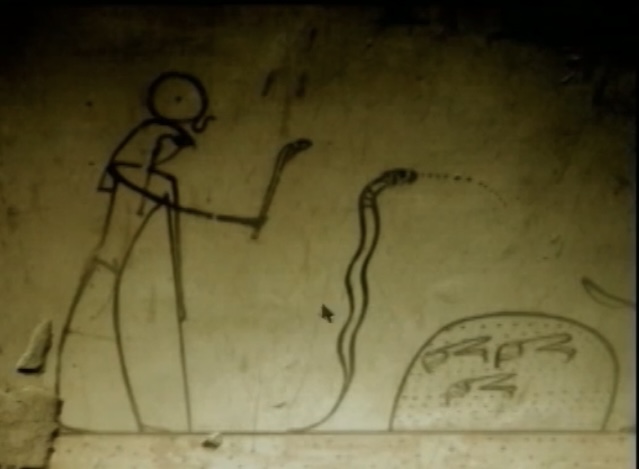
Ra with the solar disk - serpent imagery pervades Egyptian religion
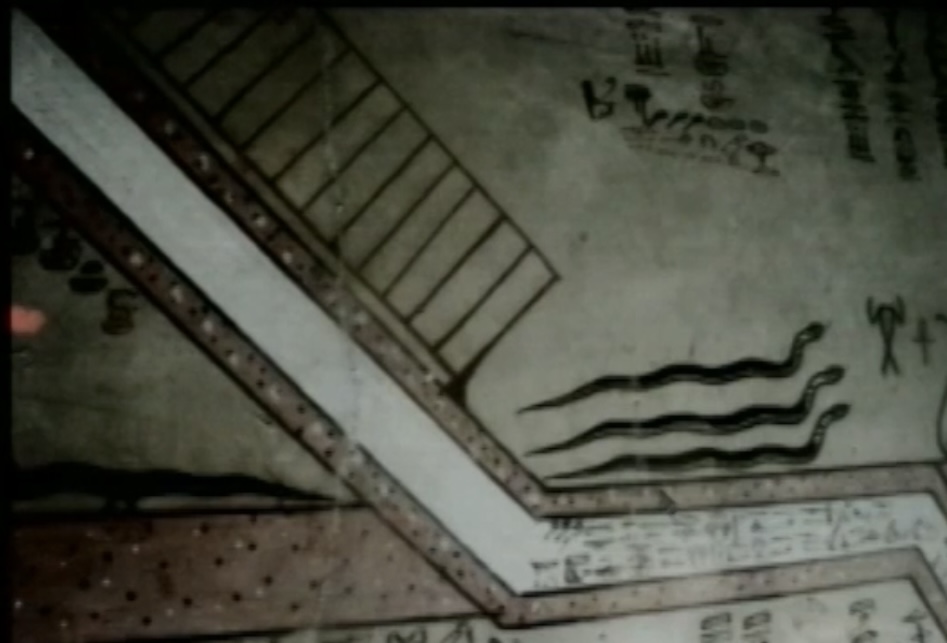
From the tomb of Tuthmosis III - the Amduat with serpent symbolism
It was Tuthmosis III who raised Re-Harakhti (Ra-Horakhty), the sun god, to the head of the Egyptian pantheon. The very name "Re-Harakhti" means "Ra-Horus of the Two Horizons"—the god of the rising and setting sun. Sun worship was not peripheral to Egyptian religion; it wascentral. And it was this Pharaoh, this sun-worshiping occultist, who hardened his heart against the God of Israel.
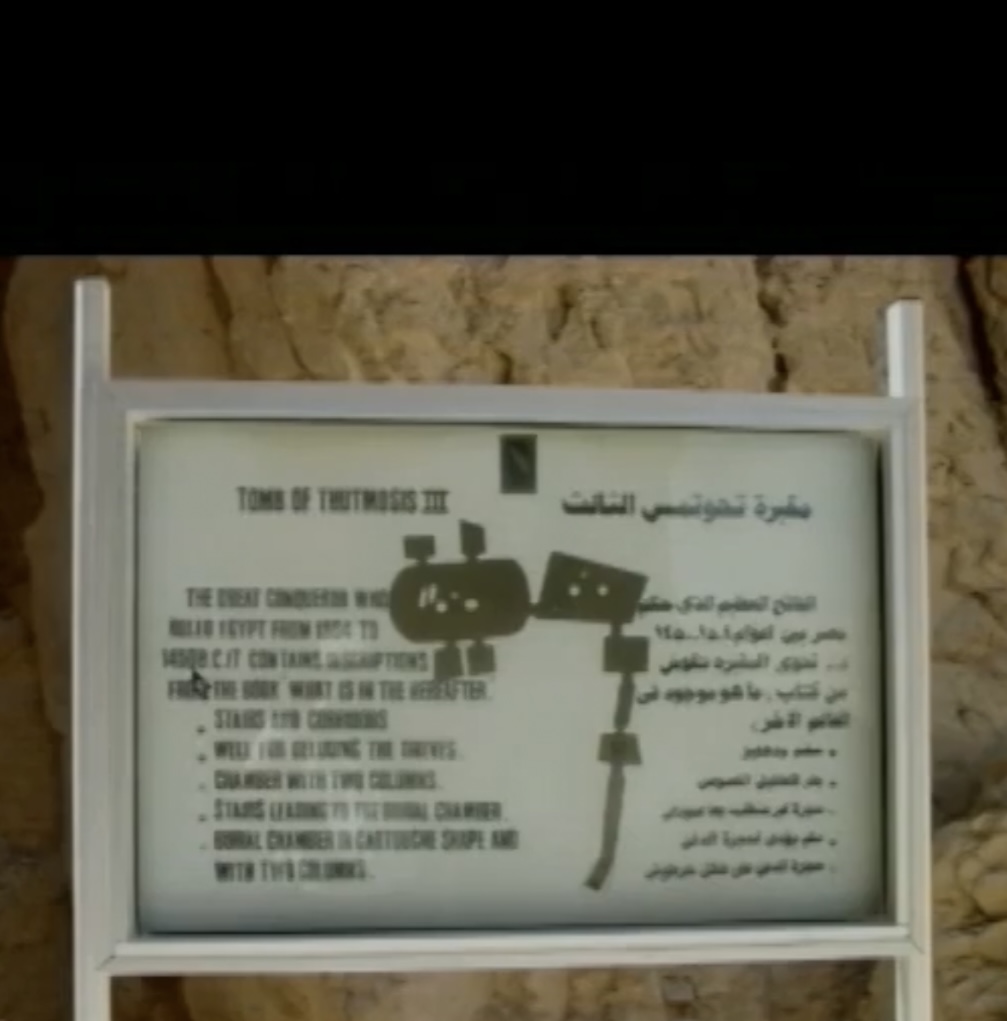
The Tomb of Tuthmosis III - containing inscriptions from the Book of the Dead
The Exodus Date: 17 March 1450 BC
According to careful chronological study, the Exodus occurred on 17 March 1450 BC—the very same date that Tuthmosis III died. The biblical account records that Pharaoh pursued Israel to the Red Sea and was destroyed with his army in the waters.
Remarkably, while a mummy identified as "Tuthmosis III" exists, there are significant questions about its authenticity. Some researchers suggest this may have been a substitute mummy, created to preserve the narrative that Pharaoh did not perish in the sea as Scripture records. The true Pharaoh of the Exodus—the one who hardened his heart against the God of Israel—drowned in the Red Sea.
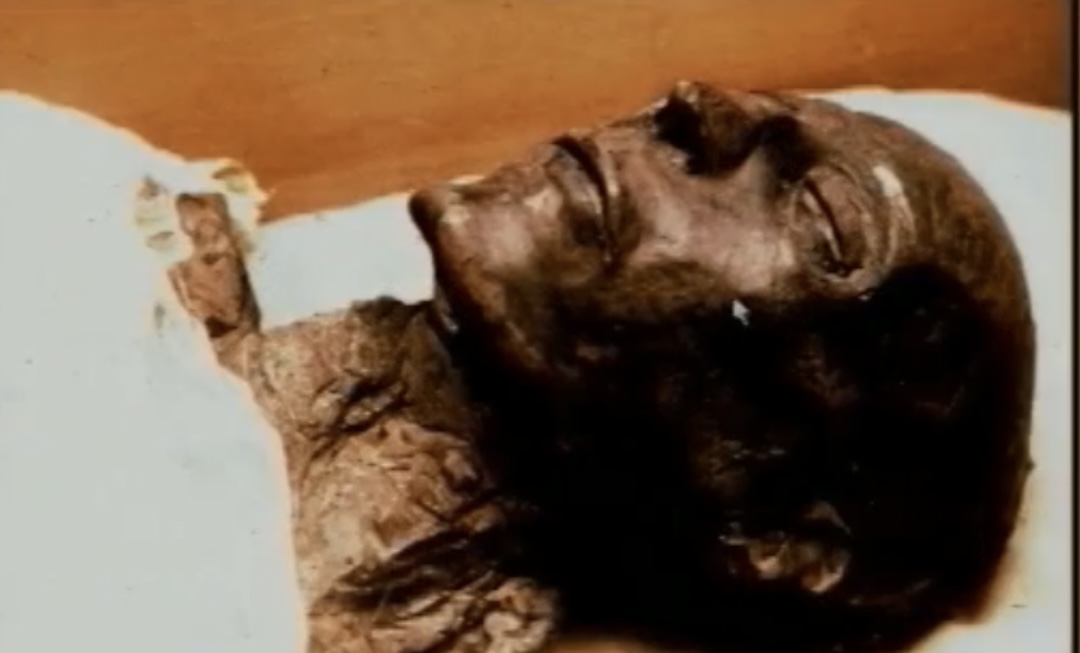
The mummy claimed to be Tuthmosis III - but was the real Pharaoh of the Exodus lost in the Red Sea?
It was into this context—under a Pharaoh devoted to sun worship and the occult—that Moses and Aaron came with their divine commission: "Let my people go, that they may serve me." But notice Pharaoh's response:
"And the king of Egypt said unto them, Wherefore do ye, Moses and Aaron, let the people from their works? get you unto your burdens. And Pharaoh said, Behold, the people of the land now are many, and ye make them rest from their burdens."
— Exodus 5:4-5 (KJV)
Here we encounter something remarkable. The Hebrew word translated "rest" in verse 5 is Shabath (שָׁבַת)—the very word for Sabbath. The Pharaoh of the Exodus—the sun-worshiping priest of Amon—recognized exactly what Moses was doing. He was calling the people to observe the Sabbath of the true God.
Sun Worship in God's Own Temple
But here is where the story becomes truly alarming. This same sun worship that Pharaoh championed did not remain in Egypt. It infiltrated Israel itself. The prophet Ezekiel was given a vision of what was happening in the very temple of God—and it should make every modern Christian tremble:
"He said also unto me, Turn thee yet again, and thou shalt see greater abominations that they do. Then he brought me to the door of the gate of the LORD's house which was toward the north; and, behold, there sat women weeping for Tammuz. Then said he unto me, Hast thou seen this, O son of man? turn thee yet again, and thou shalt see greater abominations than these.
And he brought me into the inner court of the LORD's house, and, behold, at the door of the temple of the LORD, between the porch and the altar, were about five and twenty men, with their backs toward the temple of the LORD, and their faces toward the east; and they worshipped the sun toward the east.
Then he said unto me, Hast thou seen this, O son of man? Is it a light thing to the house of Judah that they commit the abominations which they commit here? for they have filled the land with violence, and have returned to provoke me to anger: and, lo, they put the branch to their nose."
— Ezekiel 8:13-17 (KJV)
Unpacking Ezekiel's Vision
Notice the progression of abominations that God revealed to Ezekiel:
- Weeping for Tammuz — The Babylonian sun god (equivalent to the Egyptian Osiris), whose death and resurrection were celebrated in pagan fertility rites
- Twenty-five men facing east — Priests of Israel, with their backs to God's temple, worshiping the rising sun
- "Putting the branch to their nose" — A pagan ritual gesture of sun worship
This is the same sun worship that originated in Egypt under Tuthmosis III—now infiltrating the very temple of the living God!
Do you see the pattern? Sun worship did not stay in Egypt. It followed God's people. And if it could infiltrate Solomon's temple, it could infiltrate the Christian church. In fact, as we shall see, it did exactly that—and the evidence stands in plain sight for all to see.
Part 2: The Hebrew Word "Shabath" in Exodus
Hebrew Word Study
Shabath (shaw-bath')
Strong's #07673
Primary Meanings:
- • to cease, desist, rest
- • to rest, desist from labour
- • to keep or observe the sabbath
- • to celebrate
Grammatical Form:
- • Verb (Qal stem)
- • Related to noun "Shabbat"
- • Used 71 times in Hebrew Bible
While there are other Hebrew words for "rest" (such as naphash in Exodus 23:12), the inspired text deliberately uses Shabath here. Pharaoh's complaint was not merely about physical rest—he recognized that Moses was calling the people toobserve the Sabbath.
This reveals something profound: the Sabbath existed before Sinai. The children of Israel were already keeping the Sabbath in Egypt—and it was this practice that threatened Pharaoh's control. Sun worship demanded constant labor; the Sabbath proclaimed a different Lord.
Key Insight
The conflict between sun worship and Sabbath observance is as old as Israel itself. Pharaoh, representing the sun god, demanded that the people abandon their Sabbath rest. This same conflict would resurface centuries later—in Rome.
Part 3: The Obelisk's Journey—From Egypt to Rome to America
Perhaps no physical monument better illustrates the transfer of sun worship from Egypt to Rome than the Lateran Obelisk—the tallest standing ancient Egyptian obelisk in the world. But the story does not end in Rome. The same symbolism has been transplanted to the heart of the world's most powerful nation.
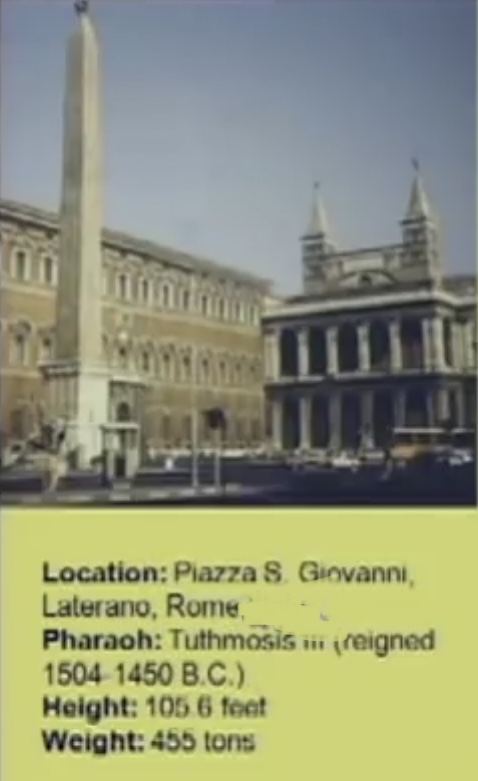
The Lateran Obelisk in Rome. Height: 105.6 feet. Weight: 455 tons. Originally from Tuthmosis III (reigned 1504-1450 BC)
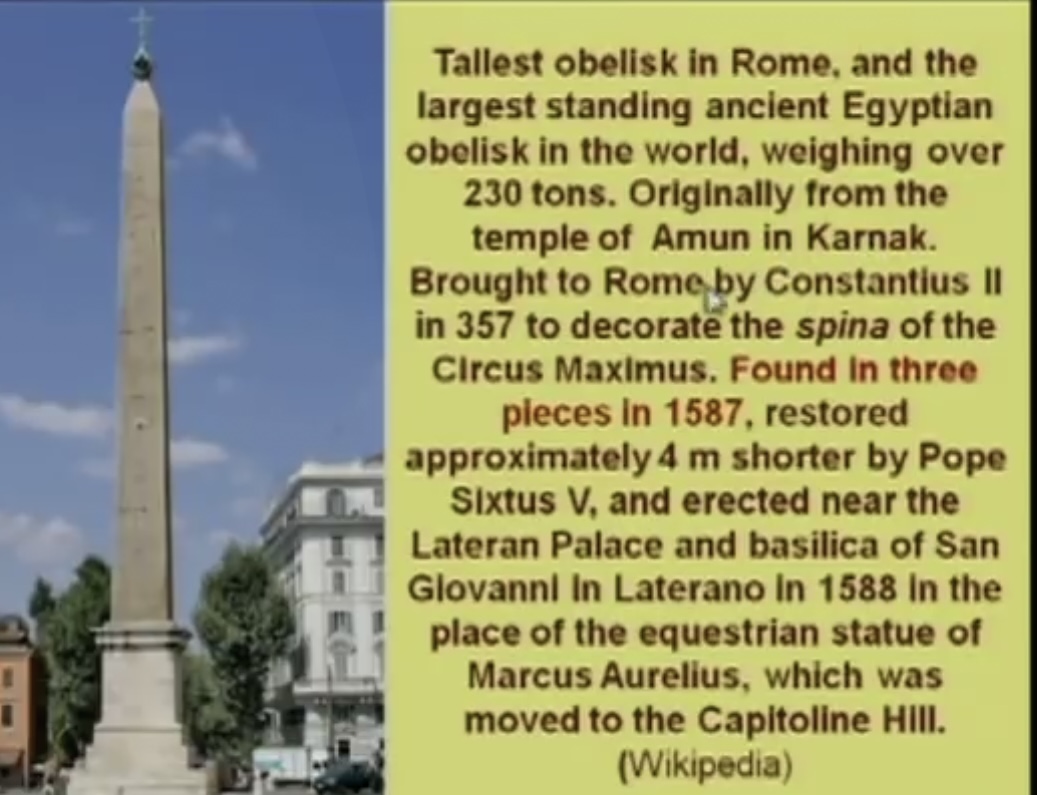
The tallest obelisk in Rome, brought from the Temple of Amun at Karnak by Constantius II in AD 357
Timeline of the Lateran Obelisk
Reign of Tuthmosis III (died 17 March 1450 BC)
Construction began under the Pharaoh of the Exodus. The obelisk was dedicated to the sun god Re-Harakhti. Tuthmosis III perished in the Red Sea on the same day of the Exodus.
Reign of Tuthmosis IV (grandson)
After 35 years in the craftsmen's workshops, the obelisk was finally erected at Karnak Temple—the only single obelisk ever raised there.
Emperor Constantine (reigned AD 306–337)
Ordered the obelisk removed for his new capital at Constantinople. He died before it left Egypt.
Emperor Constantius II (reigned AD 337–361)
Constantine's son completed his father's work. In AD 357, the obelisk was transported to Rome and re-erected in the Circus Maximus—the largest chariot racing venue where Christians were martyred.
The Fall and Restoration
At some unknown date, the obelisk fell and broke into three pieces. It was found in 1587 and restored—approximately 4 meters shorter—by Pope Sixtus V.
Pope Sixtus V (August 3, 1588)
The Pope raised the restored obelisk in the Piazza San Giovanni in Laterano—with a Christian cross placed at its apex. It replaced a statue of Marcus Aurelius that was moved to Capitoline Hill.
Consider the symbolism: an Egyptian monument dedicated to the sun god, ordered removed by Constantine (who issued the first Sunday law), transported to Rome by his son Constantius II, and eventually crowned with a Christian cross by a Pope. The physical monument traces the very path that sun worship took into Christianity. A pagan symbol of sun worship, baptized with a cross, yet retaining its original meaning.
The Obelisk in America
But the symbolism did not stop in Rome. America—the nation that would become the world's superpower—has its own obelisk standing at the very heart of its capital.
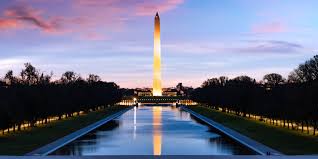
The Washington Monument on the National Mall—a 555-foot Egyptian obelisk at the heart of American power
The Washington Monument
Standing on the National Mall in Washington, D.C. is the Washington Monument—a555-foot (169 m) tall obelisk, the tallest stone structure and tallest obelisk in the world. It is an Egyptian-style monument in the capital of a nation that claims Christian foundations.
The architectural language of ancient sun worship stands at the heart of American power—aligned with the Capitol Building and the Lincoln Memorial. This is not coincidence; it is deliberate symbolism by those who understood its meaning.
The Papal Stone Scandal
Now here is where the story becomes extraordinarily interesting. In 1854, Pope Pius IX donated a block of marble from the ancient Temple of Concord in Rometo be included in the Washington Monument. Think about what this represents: the Pope sending a stone from a Roman temple to be embedded in an Egyptian-style obelisk in America's capital. The symbolism was not lost on the American public.
The Stone That Disappeared
The papal donation sparked a major scandal. Anti-Catholic sentiment in America was strong, and many were outraged that a stone from Rome would be placed in America's monument. On March 6, 1854, the papal stone mysteriously disappeared. It was said that members of the Know-Nothing Party stole and destroyed the papal stone—some accounts claim it was thrown into the Potomac River.
The controversy was so severe that donations to the monument dried up. Constructionhalted for over 23 years. When building resumed in 1877, you can actually see the difference in the marble color where work stopped and restarted—a visible scar on the monument itself.
Then, more than 100 years later in 1982, a replacement stonefrom the Vatican was quietly placed inside the monument. What was rejected publicly was eventually accepted privately.
The Pattern of Three Pieces
Now consider this remarkable pattern. We have already seen that the Lateran Obelisk in Rome was found broken into three pieces in 1587 before Pope Sixtus V restored it. And here in America, we have a monument whose construction was broken into three phases: the original construction, the 23-year halt, and the completion—with the papal stone story running through all three phases (donation, destruction, and secret replacement).
Jezebel: Found in Three Pieces
In Scripture, there is another significant account involving three pieces. When Jehu executed God's judgment on the wicked Queen Jezebel—that woman who introduced Baal worship into Israel and persecuted God's prophets—something remarkable happened:
"And they went to bury her: but they found no more of her than the skull, and the feet, and the palms of her hands."
— 2 Kings 9:35 (KJV)
Three pieces—the skull, the feet, and the hands. Jezebel, the great promoter of sun worship and Baal worship in Israel, was left in three pieces. The obelisk of the sun-worshiping Pharaoh was found in three pieces. And the monument to American power has its own story of three phases with a papal stone at its center.
Is this mere coincidence? Or does God leave markers throughout history—patterns that those with eyes to see can recognize? The spirit of Jezebel—the spirit that promotes false worship and persecutes truth—has manifested throughout the ages. And remarkably, the number three keeps appearing in connection with these symbols of sun worship.
Consider also that the state of Maryland was founded by the Jesuit Father Andrew White in 1634. The very name "Maryland" honors Mary—but which Mary? The same syncretism that placed a cross atop the Egyptian obelisk in Rome has shaped the architecture and place names of America. The same Gothic and Romanesque architectural styles seen in Vatican buildings appear throughout Washington, D.C.
"The obelisk stands today in the Piazza San Giovanni in Laterano, where it has remained since 1588—a Christian cross at its apex, yet bearing the ancient inscriptions honoring the Egyptian sun god. And in Washington, an even taller obelisk points to the sky from the heart of American power—with a papal stone hidden within its walls."
— Historical Analysis
This is not conspiracy theory. This is documented history and visible architecture. The question we must ask is: What else traveled from Egypt and Rome into the Christian church and into the nations that claim Christian heritage? The answer is Sunday worship—the venerable "Day of the Sun."
Part 4: Constantine's Sunday Decree (AD 321)
On March 7, AD 321, Emperor Constantine issued the first civil Sunday law in history. The decree read:
"On the venerable Day of the Sun let the magistrates and people residing in cities rest, and let all workshops be closed."
— Constantine's Sunday Edict, March 7, AD 321 (Codex Justinianus 3.12.2)
Notice the language: "the venerable Day of the Sun" (dies Solis). Constantine was a sun worshiper before his supposed conversion. Coins minted during his reign continued to bear the image of Sol Invictus—the "Unconquered Sun." His Sunday law was not a Christian Sabbath law; it was a sun worship law that Christians were later compelled to adopt.
What Constantine Decreed
- • Rest on the "Day of the Sun"
- • Civil law, not religious command
- • Honored Sol Invictus worship
- • Exception for agricultural work
What Scripture Commands
- • Rest on the seventh day (Sabbath)
- • Divine command from Creation
- • Honors the Creator God
- • Complete rest for all
The historical record is clear: Sunday observance entered Christianity throughimperial decree, not apostolic command. No text in the New Testament commands Sunday worship. No apostle ever called Sunday the "Lord's Day" or commanded rest upon it.
Part 5: The Papal Claim—"The Mark of Our Authority"
What is remarkable is that the Roman Catholic Church does not deny this history. In fact, it boasts of it as proof of its authority:
"Sunday is our mark of authority... The church is above the Bible, and this transference of Sabbath observance is proof of that fact."
— Catholic Record, September 1, 1923
"The Catholic Church for over one thousand years before the existence of a Protestant, by virtue of her divine mission, changed the day from Saturday to Sunday."
— Catholic Mirror, September 23, 1893
"You may read the Bible from Genesis to Revelation, and you will not find a single line authorizing the sanctification of Sunday. The Scriptures enforce the religious observance of Saturday, a day which we never sanctify."
— Cardinal James Gibbons, The Faith of Our Fathers
"If Protestants would follow the Bible, they should worship God on the Sabbath Day. In keeping the Sunday they are following a law of the Catholic Church."
— Albert Smith, Chancellor of the Archdiocese of Baltimore, letter dated February 10, 1920
"Protestantism, in discarding the authority of the Roman [Catholic] Church, has no good reasons for its Sunday theory, and ought logically to keep Saturday as the Sabbath."
— John Gilmary Shea, American Catholic Quarterly Review, January 1883
The Admission
Rome openly admits that Sunday observance has no biblical basis. It claims the change as the exercise of its own authority—an authority it claims is above Scripture. This is not a Protestant accusation; it is Rome's own testimony. Even Catholic scholars acknowledge that Protestants who follow the Bible alone should logically keep Saturday—and that by keeping Sunday, they are following Catholic tradition, not Scripture.
Protestant Scholars Agree
It is not only Catholic authorities who make this admission. Honest Protestant scholars have also acknowledged that Scripture provides no warrant for changing the Sabbath:
"There was and is a commandment to keep holy the Sabbath day, but that Sabbath day was not Sunday... There is no scriptural evidence of the change of the Sabbath institution from the seventh day to the first day of the week."
— Dr. Edward T. Hiscox (author of the Baptist Manual), New York Ministers Conference, November 13, 1893
The Unavoidable Conclusion
When both Catholic and Protestant scholars admit there is no scriptural authority for Sunday worship—when Rome claims the change as her own act of authority and Protestants acknowledge they cannot find it in Scripture—we are left with a profound question: On whose authority do we worship? The Word of God, or the traditions of men?
Part 6: The Faithful Remnant—It Has Happened, It Will Happen Again
Throughout history, there has always been a remnant who kept God's seventh-day Sabbath despite fierce persecution. Their blood cries out from the pages of history as a witness that the truth was never fully extinguished. What happened to them will happen again.
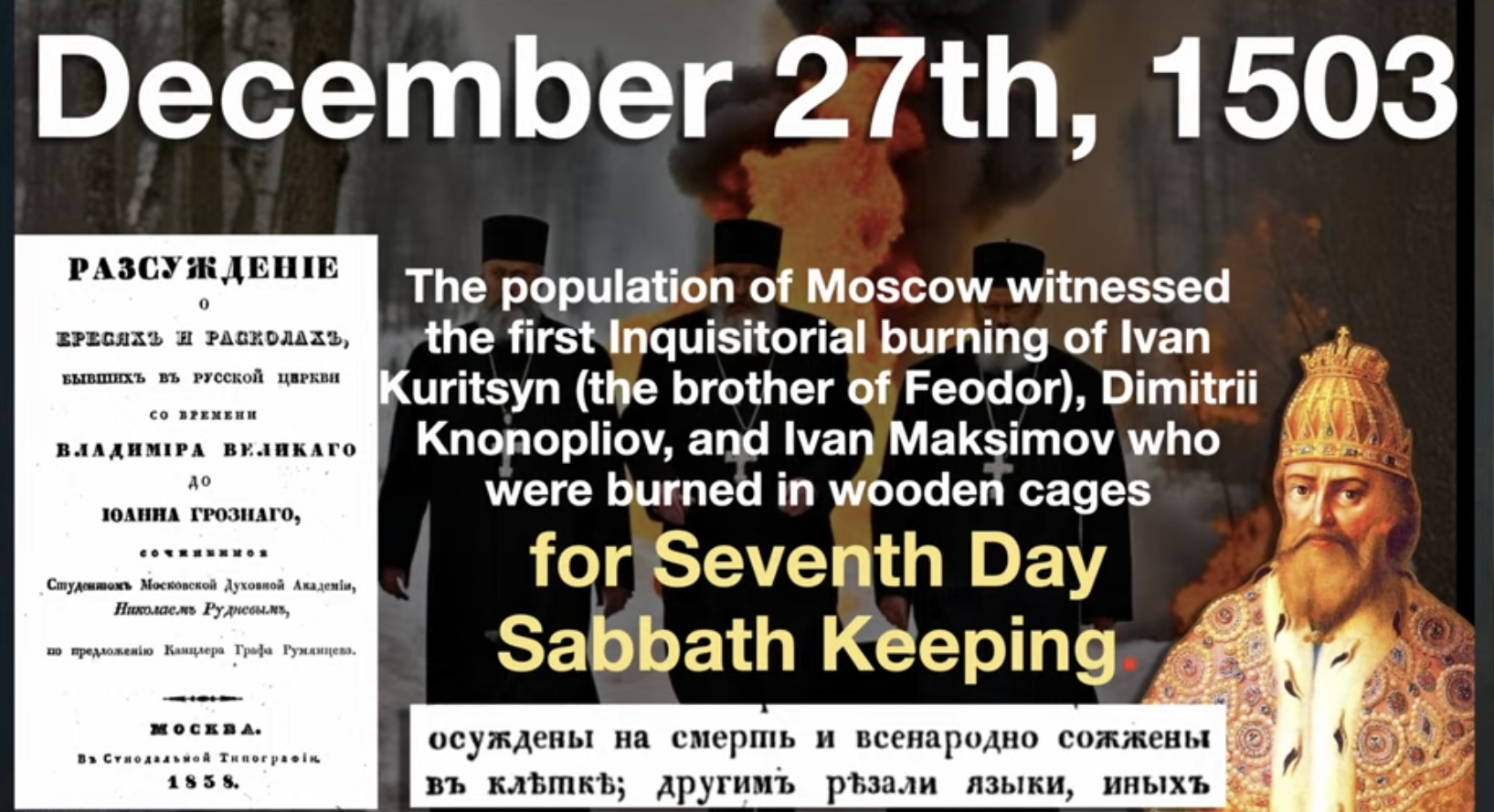
December 27, 1503 — Moscow, Russia
The population of Moscow witnessed the first Inquisitorial burning of Ivan Kuritsyn(brother of Feodor), Dimitrii Knonopliov, and Ivan Maksimov, who were burned alive in wooden cages for seventh-day Sabbath keeping.
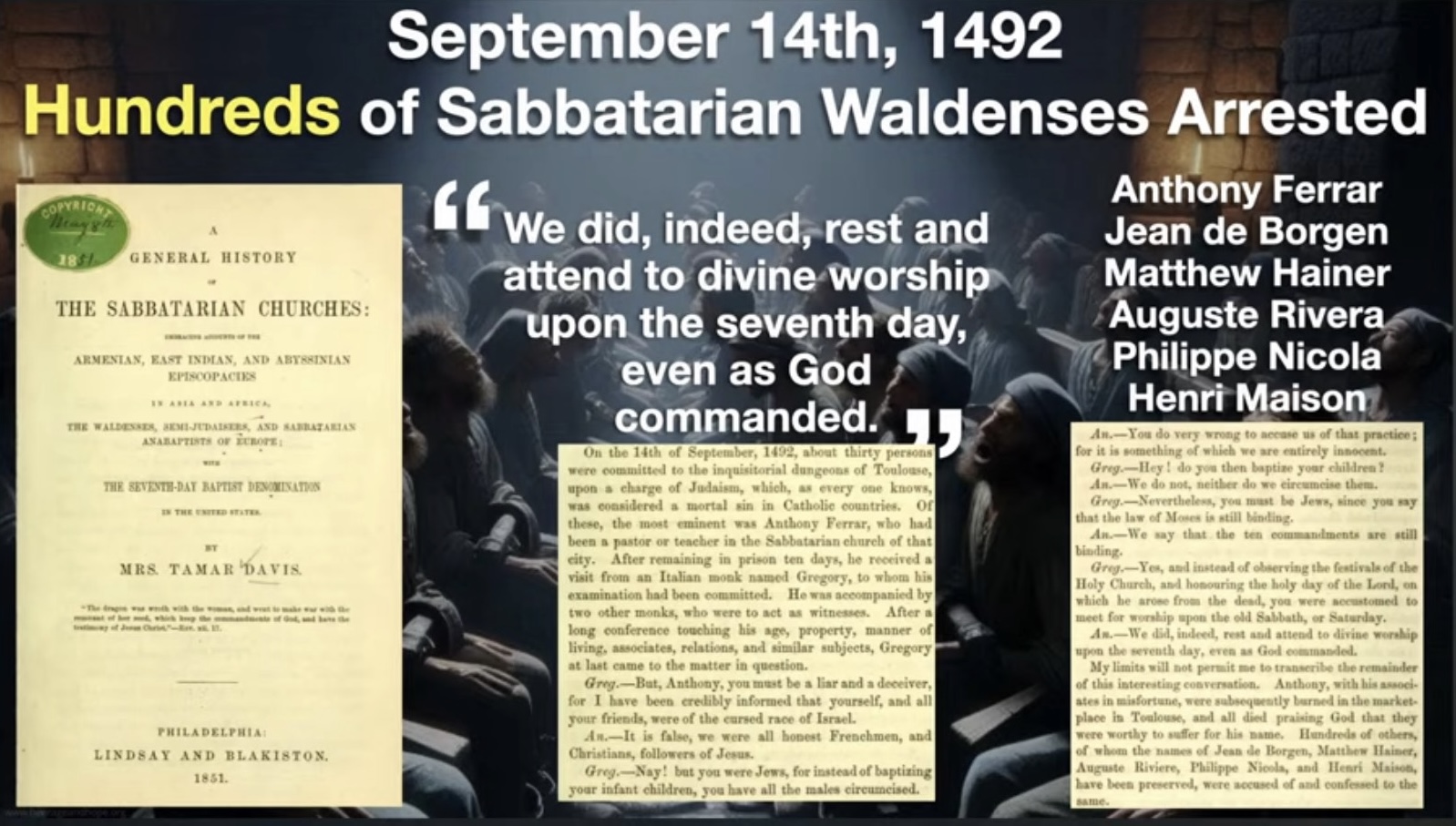
September 14, 1492 — Toulouse, France
Hundreds of Sabbatarian Waldenses were arrested and committed to the inquisitorial dungeons of Toulouse. Among those arrested were Anthony Ferrar,Jean de Borgen, Matthew Hainer, Auguste Rivera,Philippe Nicola, and Henri Maison.
"We did, indeed, rest and attend to divine worship upon the seventh day, even as God commanded."
— Testimony of the Sabbatarian Waldenses, A General History of the Sabbatarian Churches (1851)
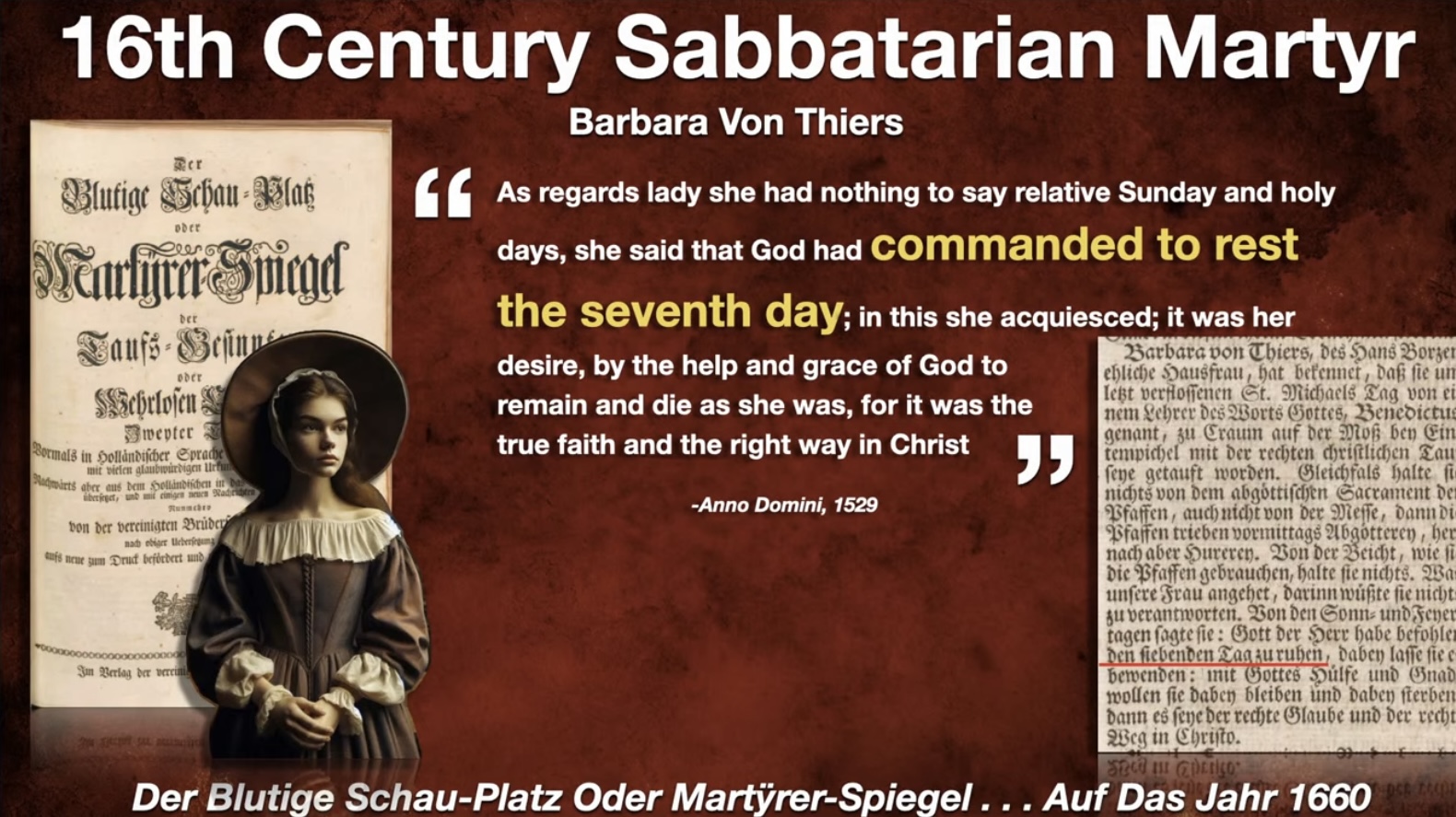
Anno Domini 1529 — Barbara Von Thiers
This 16th century Sabbatarian martyr, recorded in the Martyrs Mirror(Der Blutige Schau-Platz Oder Martyrer-Spiegel, 1660), faced death for her faith.
"As regards lady she had nothing to say relative Sunday and holy days, she said that God had commanded to rest the seventh day; in this she acquiesced; it was her desire, by the help and grace of God to remain and die as she was, for it was the true faith and the right way in Christ."
— Der Blutige Schau-Platz Oder Martyrer-Spiegel, 1660
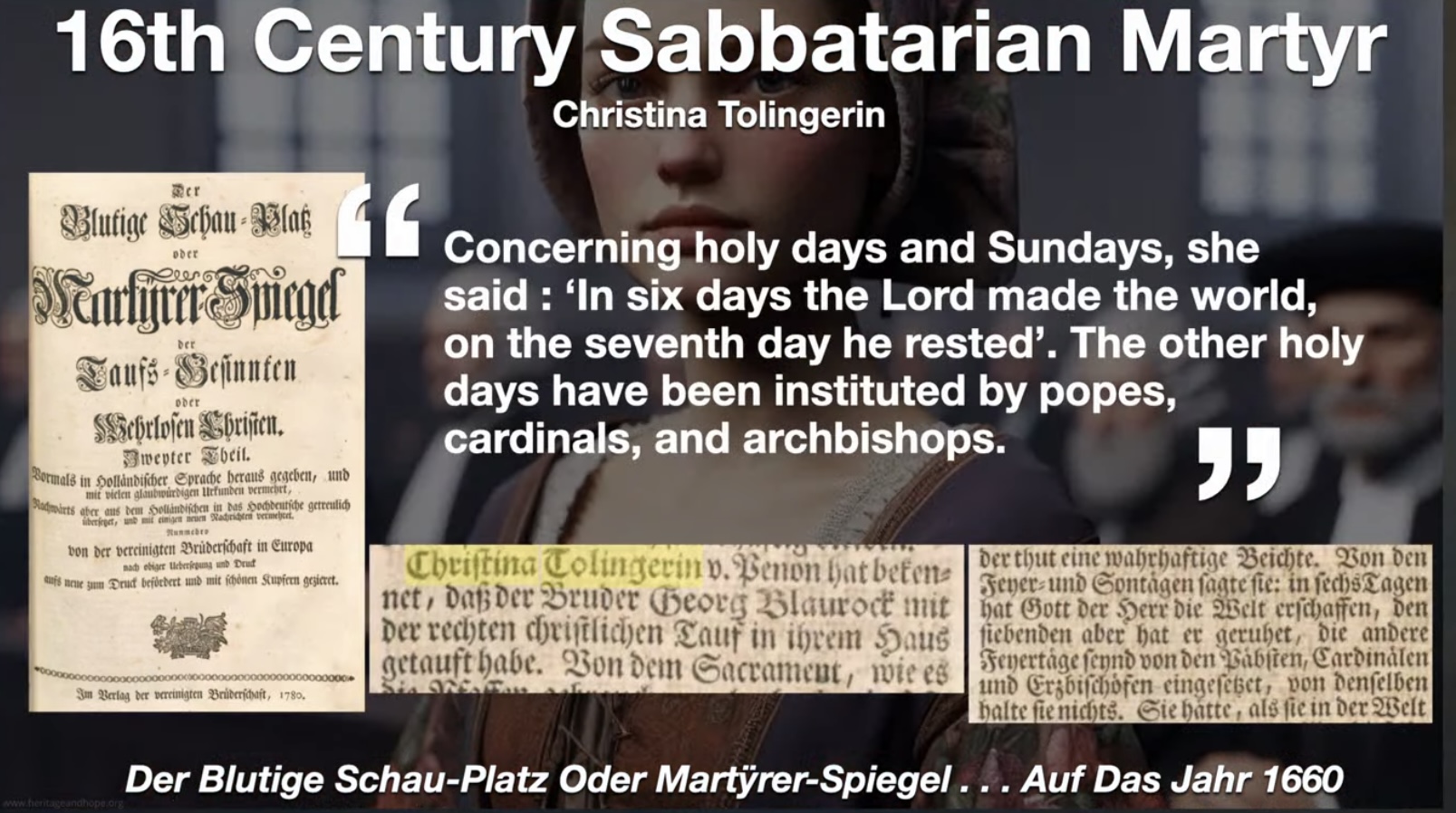
16th Century — Christina Tolingerin
Another martyr recorded in the Martyrs Mirror, Christina Tolingerin gave a clear testimony distinguishing between God's Sabbath and man-made holy days:
"Concerning holy days and Sundays, she said: 'In six days the Lord made the world, on the seventh day he rested.' The other holy days have been instituted by popes, cardinals, and archbishops."
— Der Blutige Schau-Platz Oder Martyrer-Spiegel, 1660
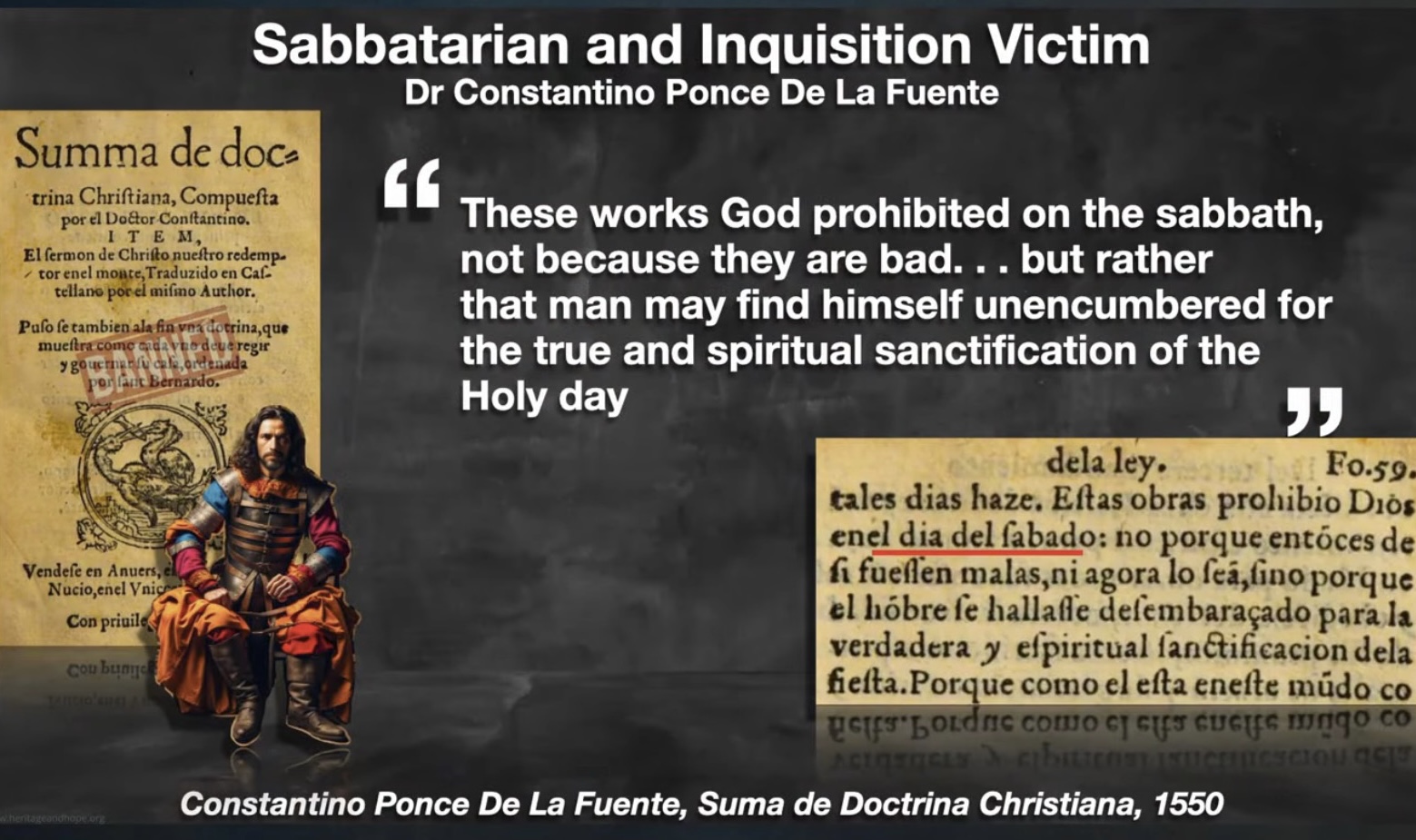
1550 — Dr. Constantino Ponce De La Fuente
A Sabbatarian and victim of the Spanish Inquisition, Dr. Constantino wrote in hisSuma de Doctrina Christiana about the true purpose of Sabbath rest:
"These works God prohibited on the sabbath, not because they are bad... but rather that man may find himself unencumbered for the true and spiritual sanctification of the Holy day."
— Constantino Ponce De La Fuente, Suma de Doctrina Christiana, 1550
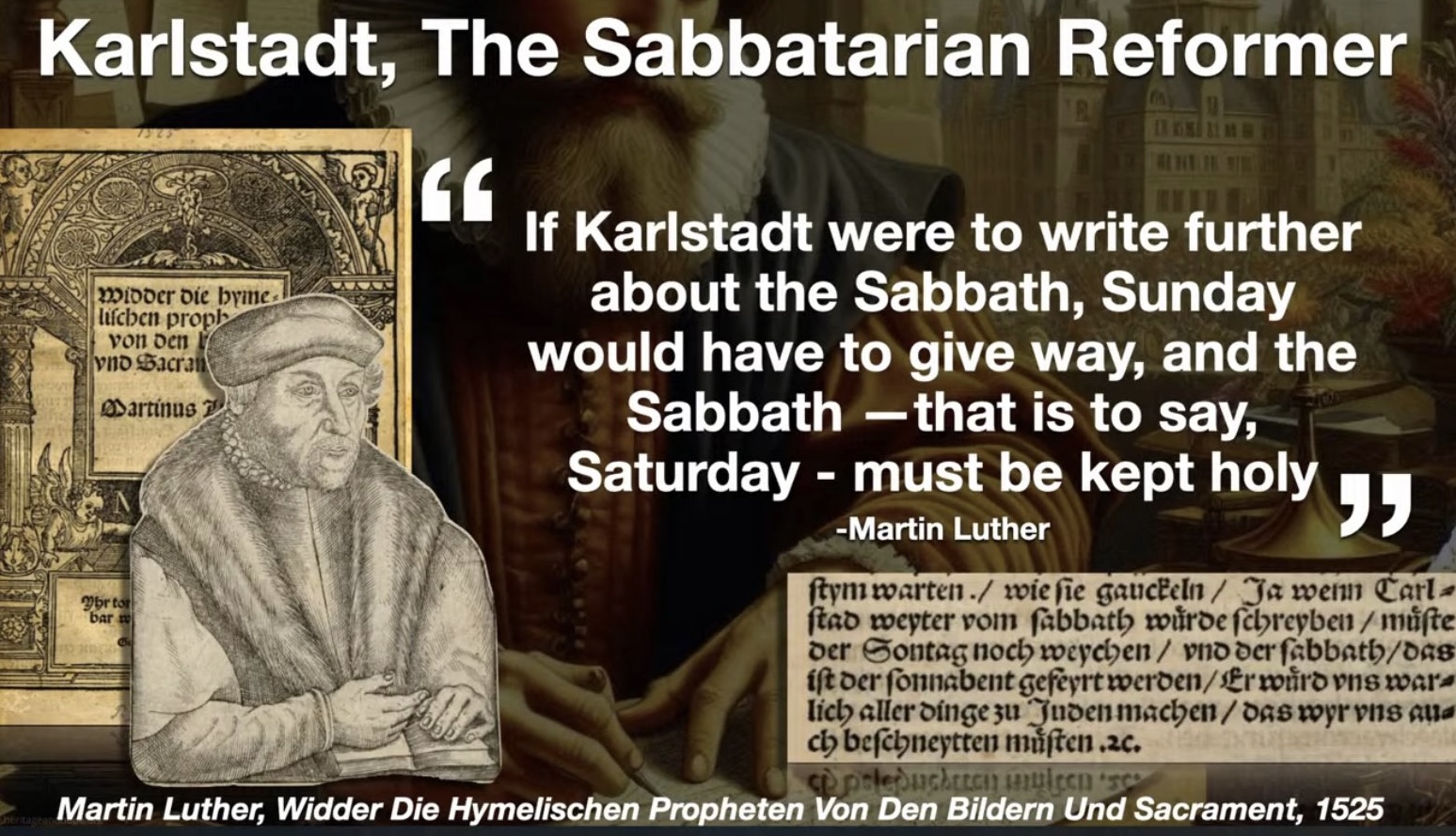
The Reformation Era — Andreas Karlstadt
Even Martin Luther acknowledged that his fellow reformer Karlstadt's writings on the Sabbath were so compelling that they threatened to overturn Sunday observance entirely:
"If Karlstadt were to write further about the Sabbath, Sunday would have to give way, and the Sabbath—that is to say, Saturday—must be kept holy."
— Martin Luther, Widder Die Hymelischen Propheten Von Den Bildern Und Sacrament, 1525
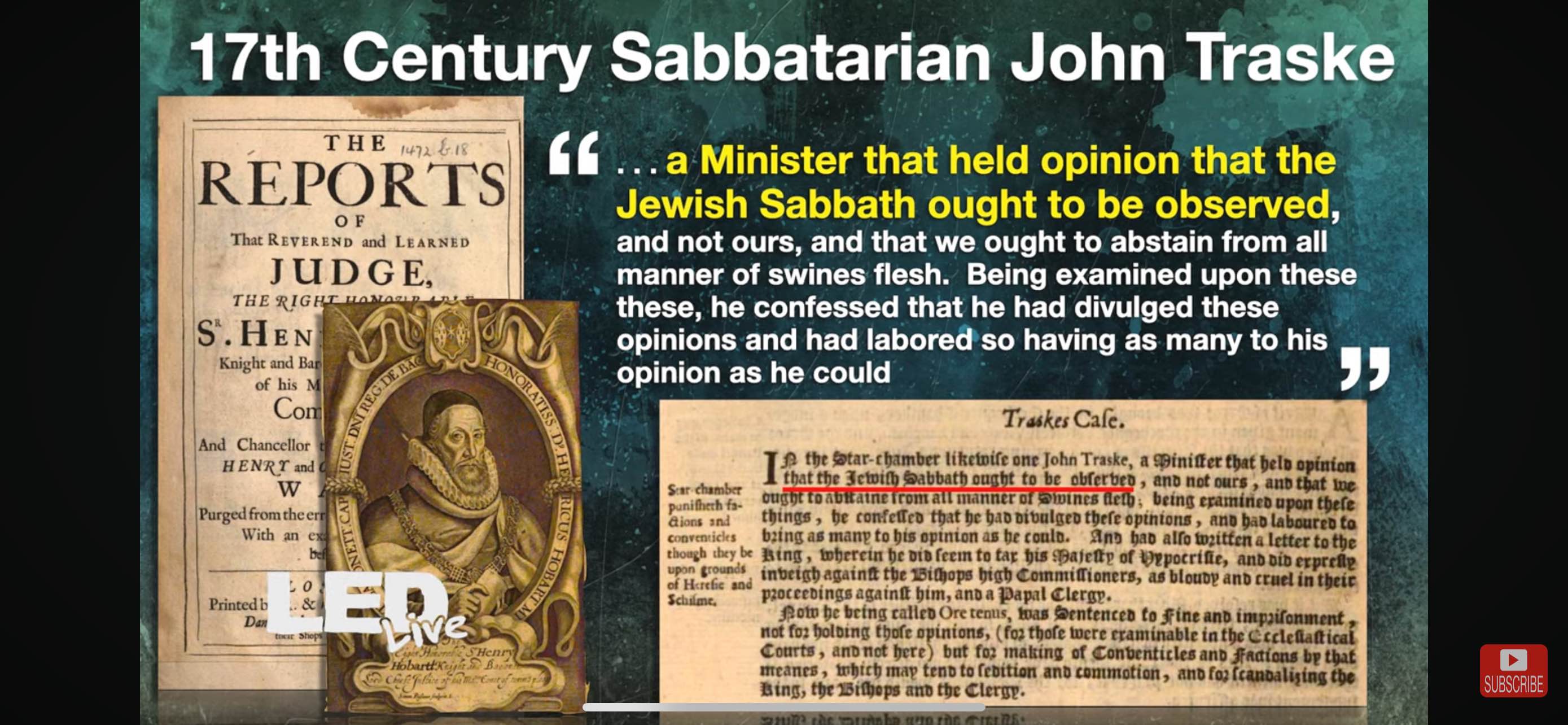
17th Century — John Traske
A minister who was persecuted for teaching that the seventh-day Sabbath should be observed:
"...a Minister that held opinion that the Jewish Sabbath ought to be observed, and not ours, and that we ought to abstain from all manner of swines flesh. Being examined upon these, he confessed that he had divulged these opinions and had labored so having as many to his opinion as he could."
— The Reports of Sir Henry Hobart, Traske's Case
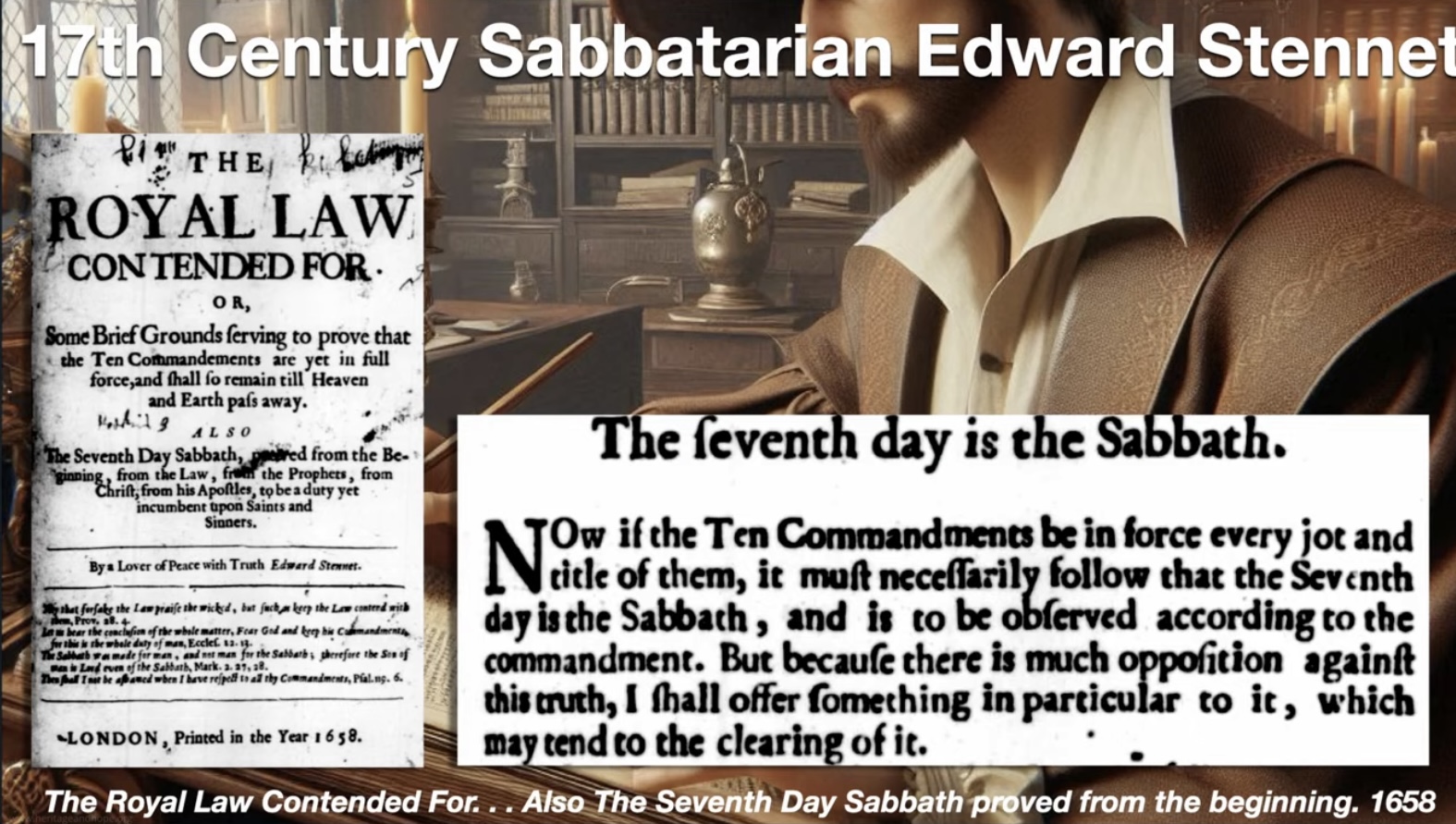
1658 — Edward Stennet
Author of "The Royal Law Contended For... Also The Seventh Day Sabbath proved from the beginning", Stennet wrote a powerful defense of the Sabbath:
"The seventh day is the Sabbath. Now if the Ten Commandments be in force every jot and title of them, it must necessarily follow that the Seventh day is the Sabbath, and is to be observed according to the commandment. But because there is much opposition against this truth, I shall offer something in particular to it, which may tend to the clearing of it."
— Edward Stennet, The Royal Law Contended For, London, 1658
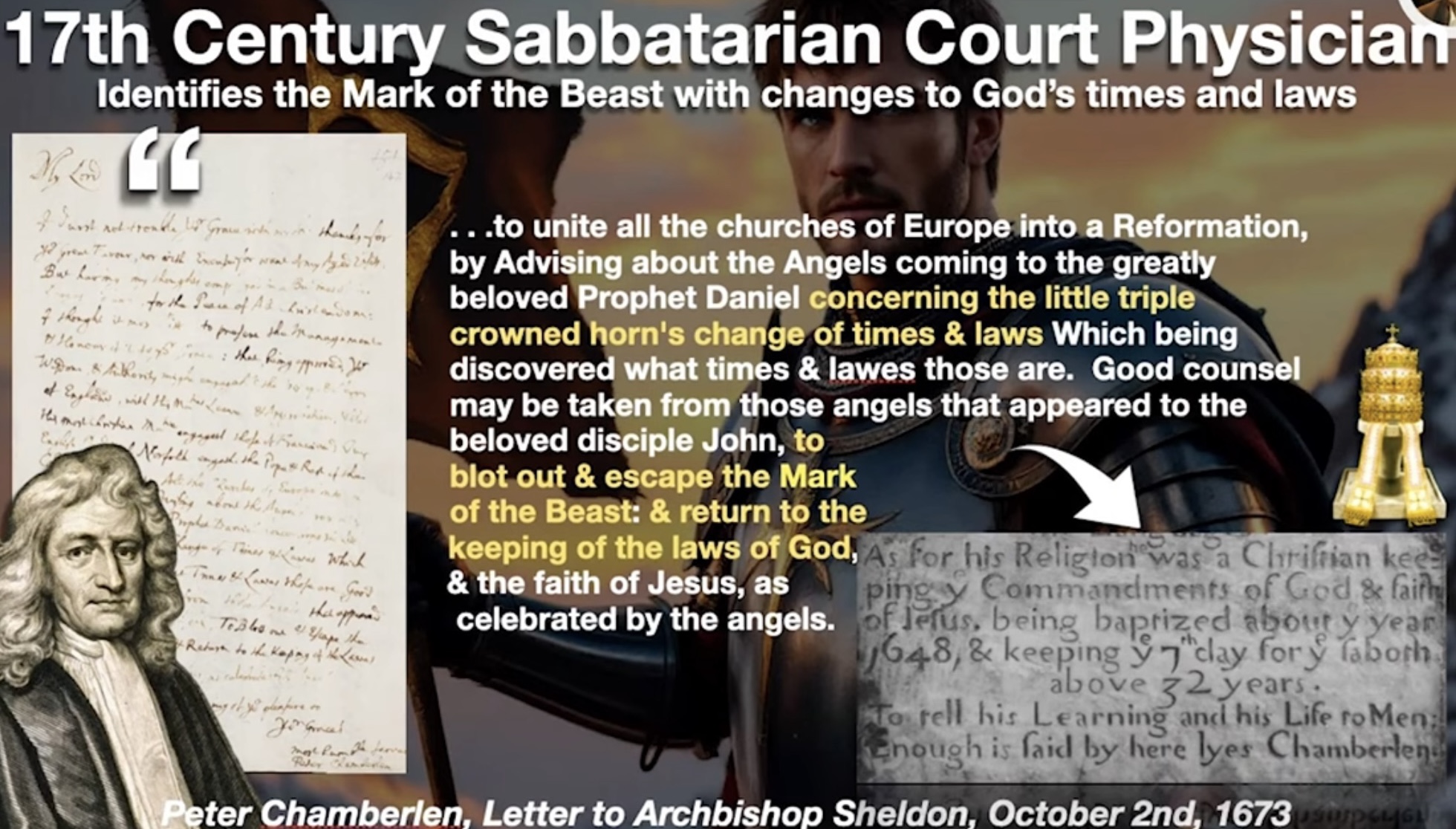
October 2, 1673 — Peter Chamberlen
A 17th century court physician who kept the Sabbath for 32 years, Chamberlen wrote to Archbishop Sheldon identifying the Mark of the Beast with changes to God's times and laws:
"...to unite all the churches of Europe into a Reformation, by Advising about the Angels coming to the greatly beloved Prophet Daniel concerning the little triple crowned horn's change of times & laws. Which being discovered what times & lawes those are. Good counsel may be taken from those angels that appeared to the beloved disciple John,to blot out & escape the Mark of the Beast: & return to the keeping of the laws of God, & the faith of Jesus, as celebrated by the angels."
— Peter Chamberlen, Letter to Archbishop Sheldon, October 2, 1673
His gravestone testified: "As for his Religion was a Christian keeping y Commandments of God & faith of Jesus, being baptized about y year 1648, & keeping y 7th day for y Saboth above 32 years."
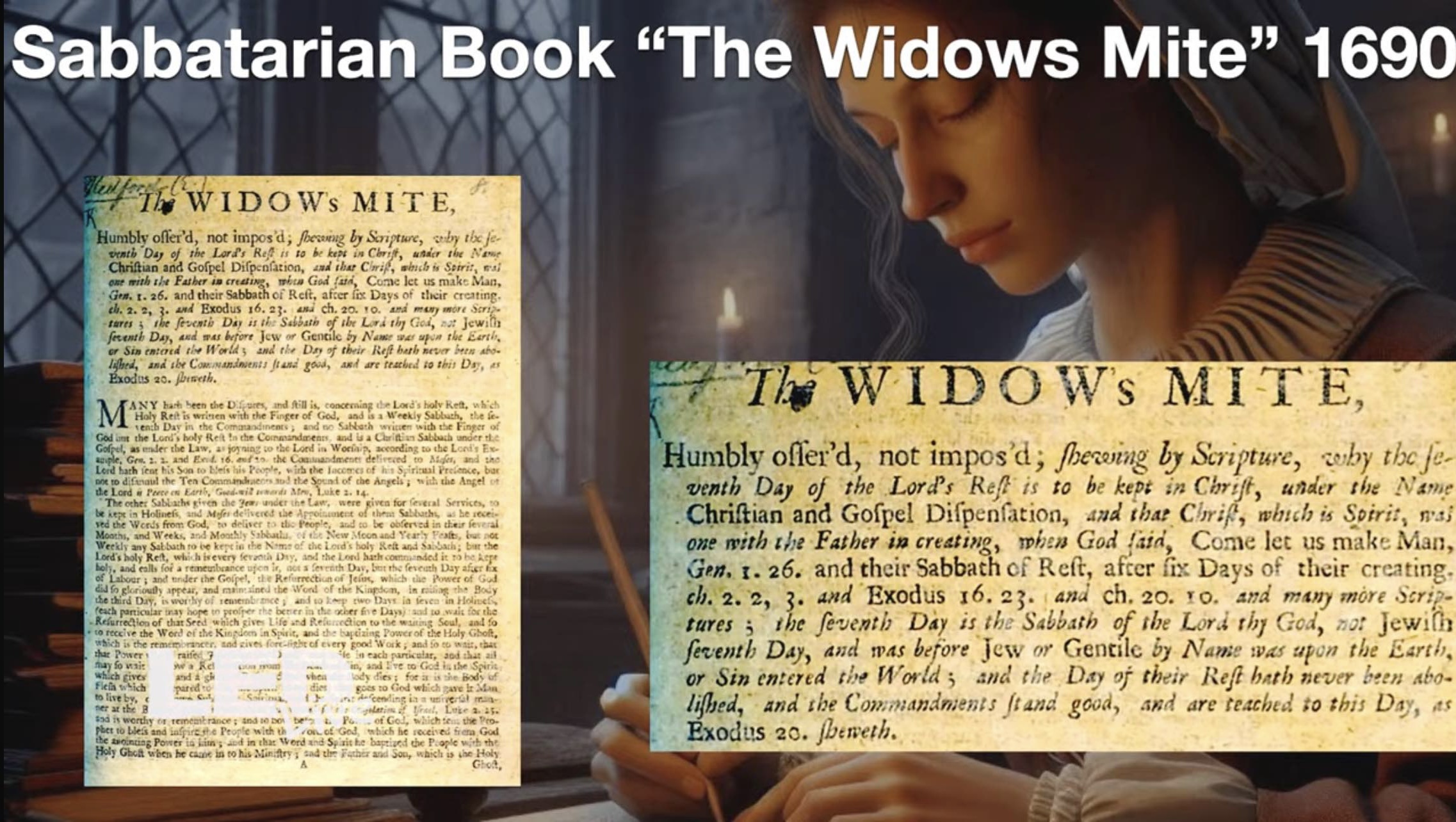
1690 — "The Widow's Mite"
This Sabbatarian book from 1690 proclaimed that the seventh day is the Sabbath of the Lord, not the "Jewish" Sabbath, and that it existed before Jew or Gentile entered the world:
"The seventh Day is the Sabbath of the Lord thy God, not Jewish seventh Day, and was before Jew or Gentile by Name was upon the Earth, or Sin entered the World; and the Day of their Rest hath never been abolished, and the Commandments stand good, and are teached to this Day, as Exodus 20 sheweth."
— The Widow's Mite, 1690
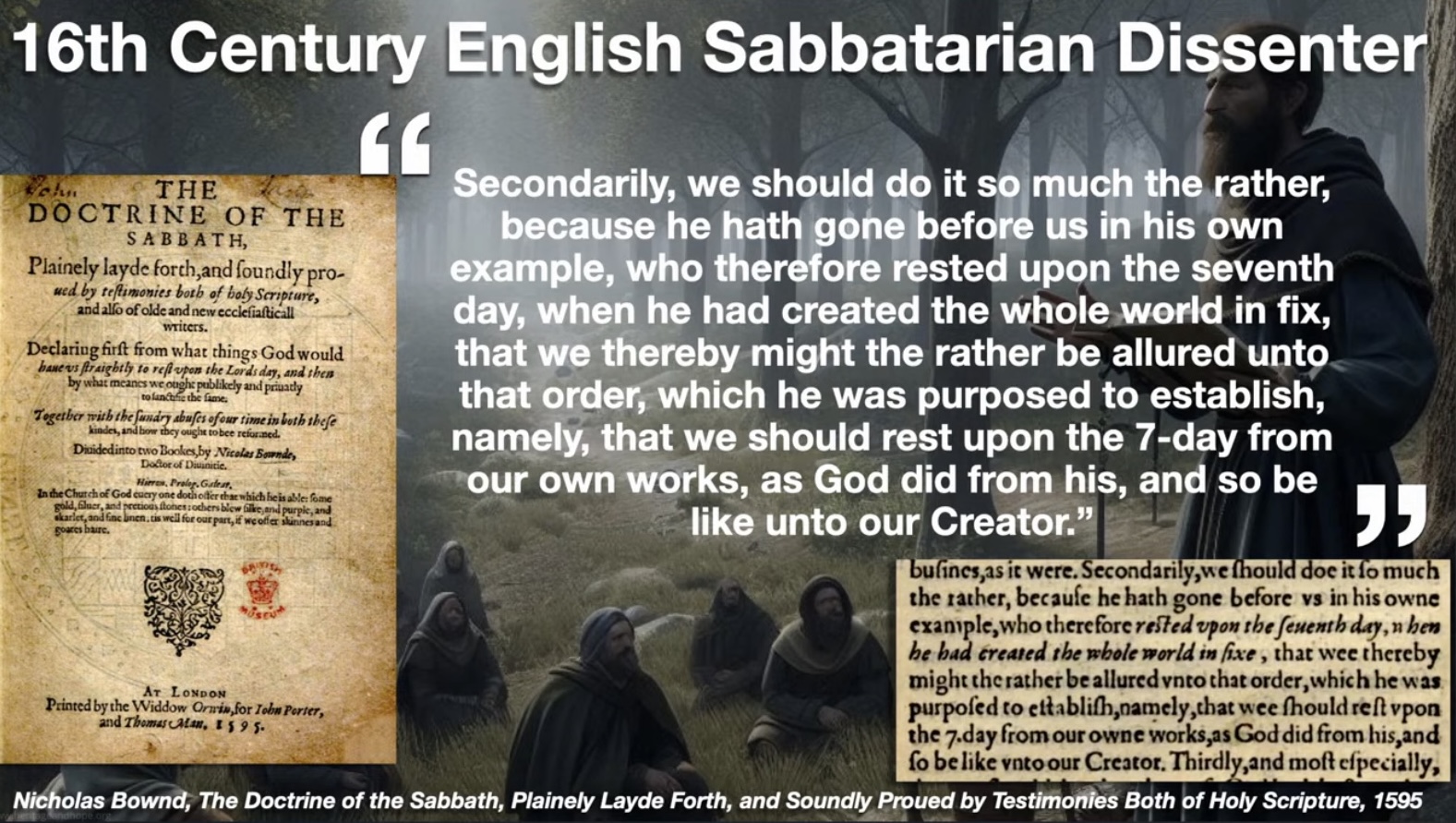
1595 — Nicholas Bownd
This 16th century English Sabbatarian dissenter published "The Doctrine of the Sabbath, Plainely Layde Forth, and Soundly Proved by Testimonies Both of Holy Scripture" in 1595. His work argued powerfully that the seventh-day rest was established by God's own example at Creation:
"Secondarily, we should do it so much the rather, because he hath gone before us in his own example, who therefore rested upon the seventh day, when he had created the whole world in fix, that we thereby might the rather be allured unto that order, which he was purposed to establish, namely, that we should rest upon the 7-day from our own works, as God did from his, and so be like unto our Creator."
— Nicholas Bownd, The Doctrine of the Sabbath, London, 1595
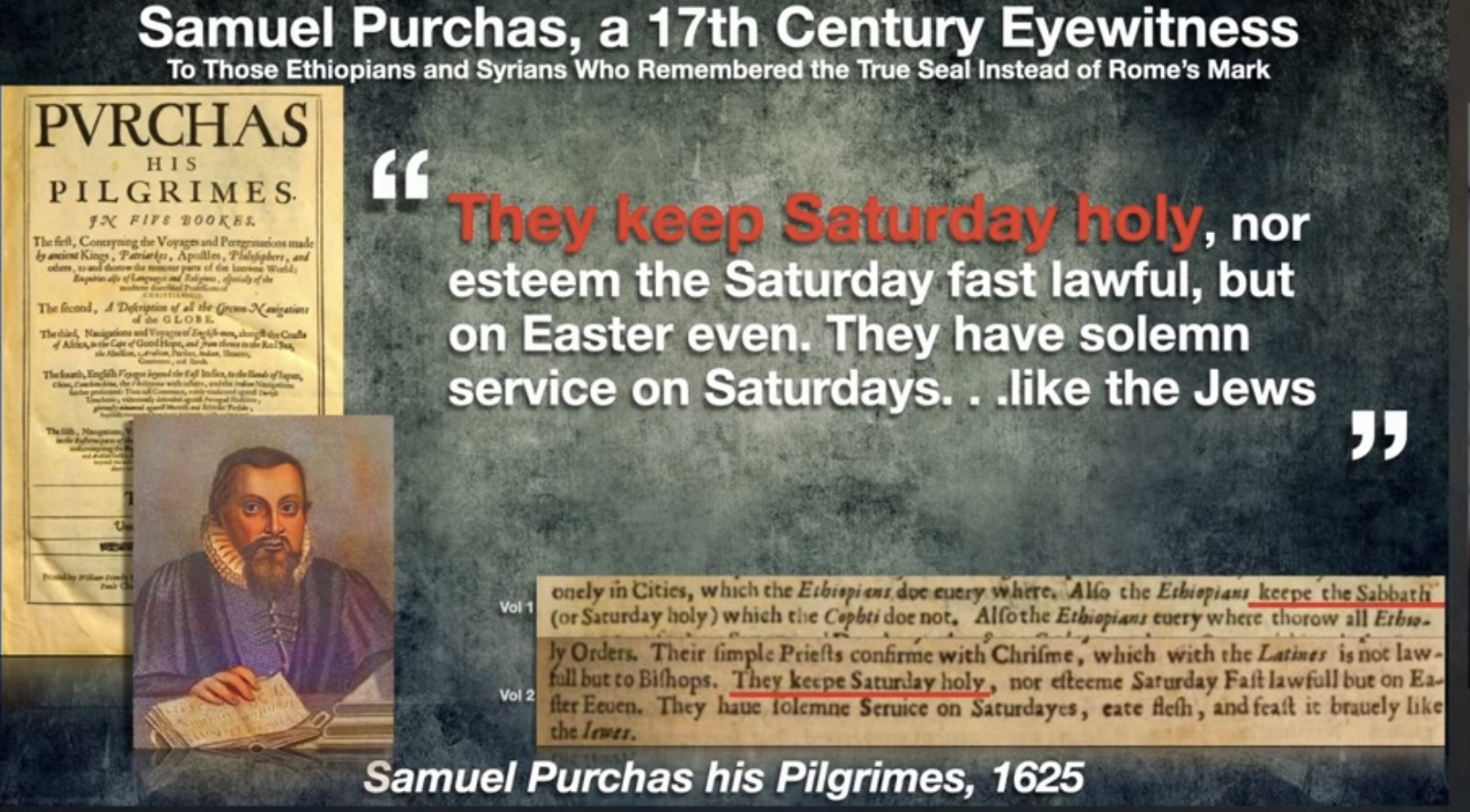
1625 — Samuel Purchas, Eyewitness
The English clergyman Samuel Purchas, in his monumental work Purchas his Pilgrimes (1625), documented that the Ethiopians and Syrians—far from the reach of Rome—still remembered the true Seal of God instead of Rome's mark:
"They keep Saturday holy, nor esteem the Saturday fast lawful, but on Easter even. They have solemn service on Saturdays... like the Jews."
— Samuel Purchas, Purchas his Pilgrimes, 1625
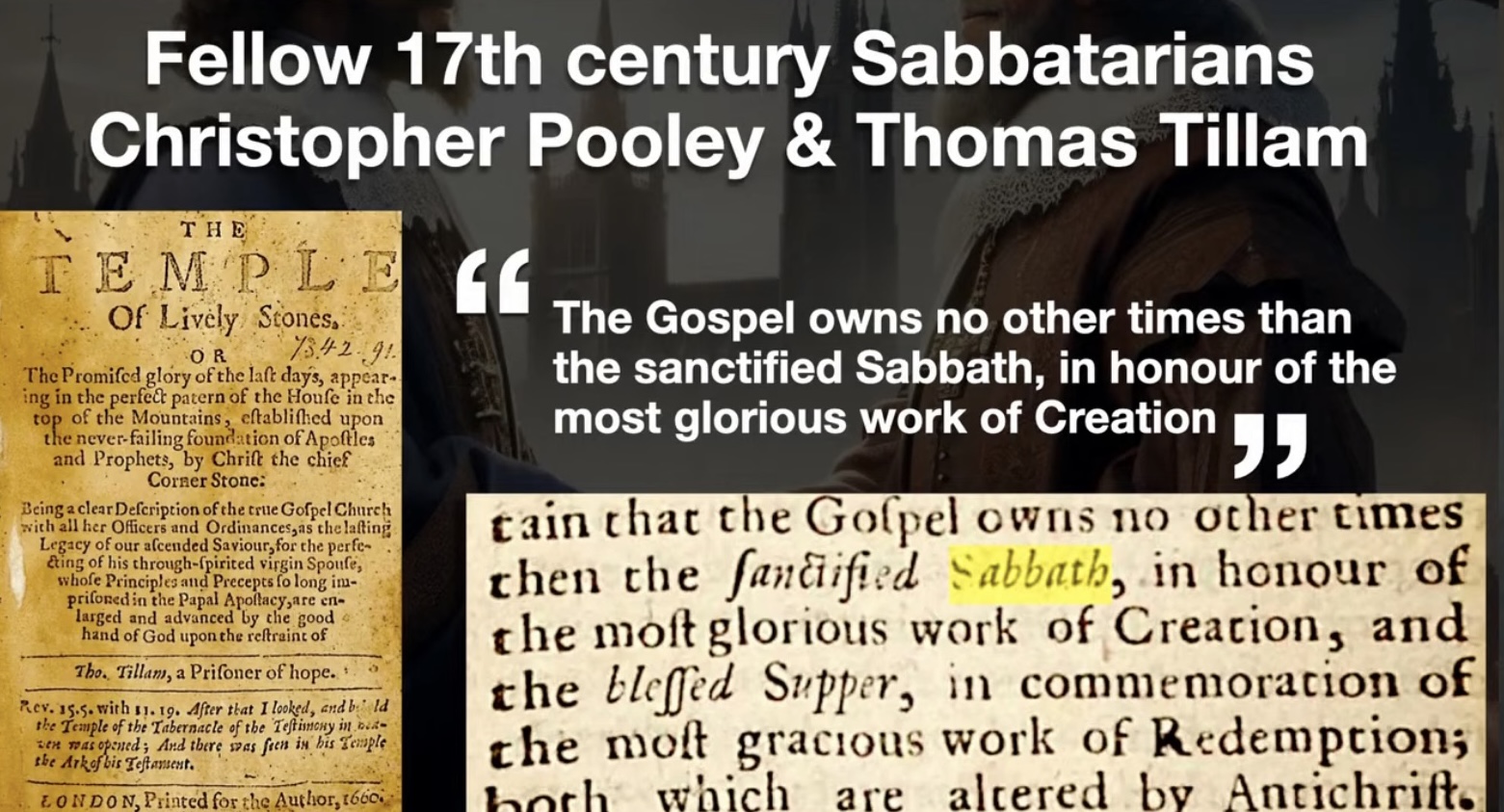
1660 — Christopher Pooley & Thomas Tillam
Thomas Tillam, a "Prisoner of hope," published The Temple of Lively Stones in 1660—a clear description of the true Gospel Church whose "Principles and Precepts so long imprisoned in the Papal Apostacy" were being restored. His declaration left no room for ambiguity:
"The Gospel owns no other times than the sanctified Sabbath, in honour of the most glorious work of Creation."
— Thomas Tillam, The Temple of Lively Stones, London, 1660
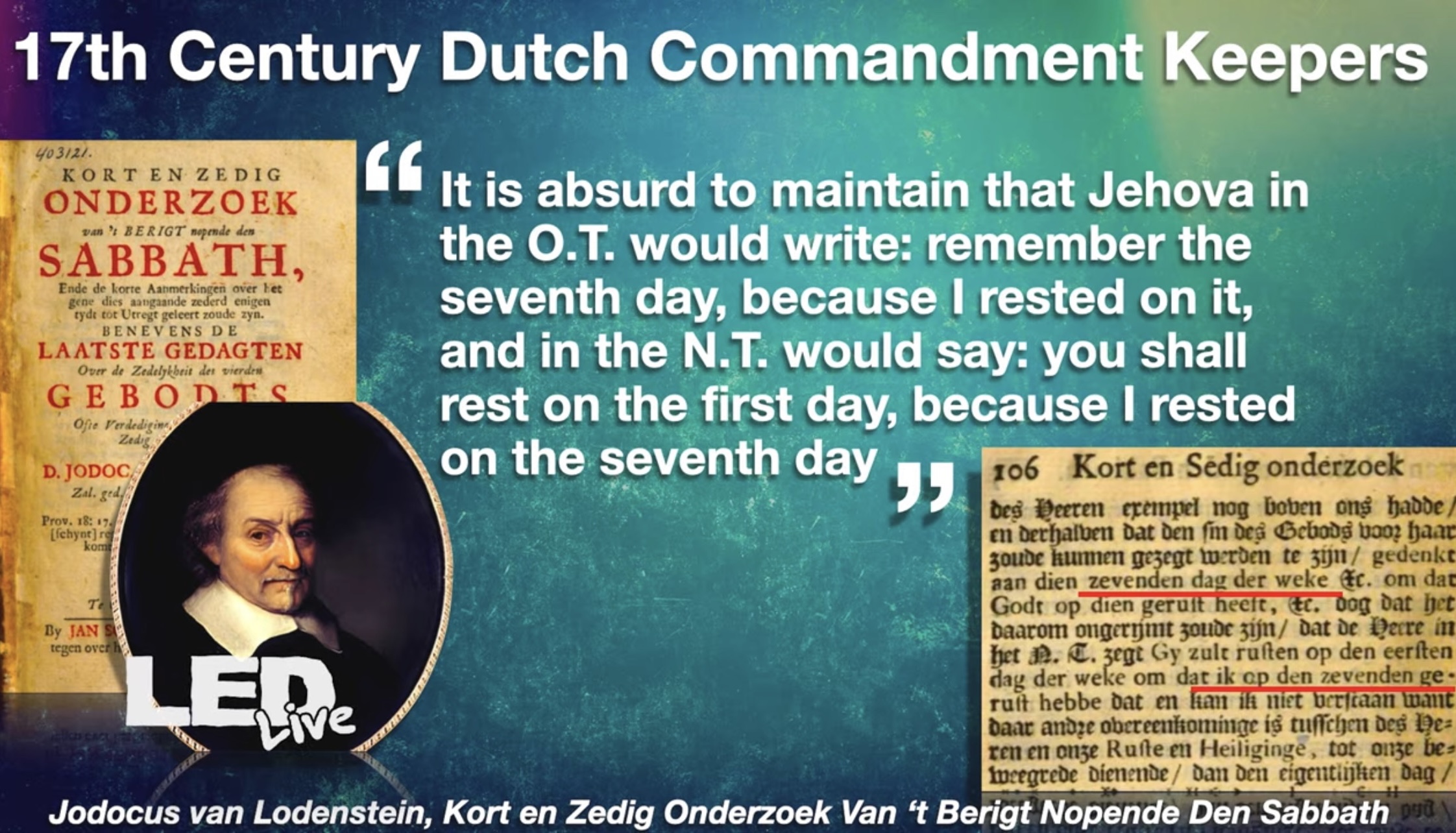
17th Century — Jodocus van Lodenstein, Dutch Commandment Keeper
The Dutch Reformed theologian Jodocus van Lodenstein published Kort en Zedig Onderzoek Van 't Berigt Nopende Den Sabbath, a careful investigation of the Sabbath question. His reasoning exposed the absurdity of the Sunday change:
"It is absurd to maintain that Jehova in the O.T. would write: remember the seventh day, because I rested on it, and in the N.T. would say: you shall rest on the first day, because I rested on the seventh day."
— Jodocus van Lodenstein, Kort en Zedig Onderzoek Van 't Berigt Nopende Den Sabbath
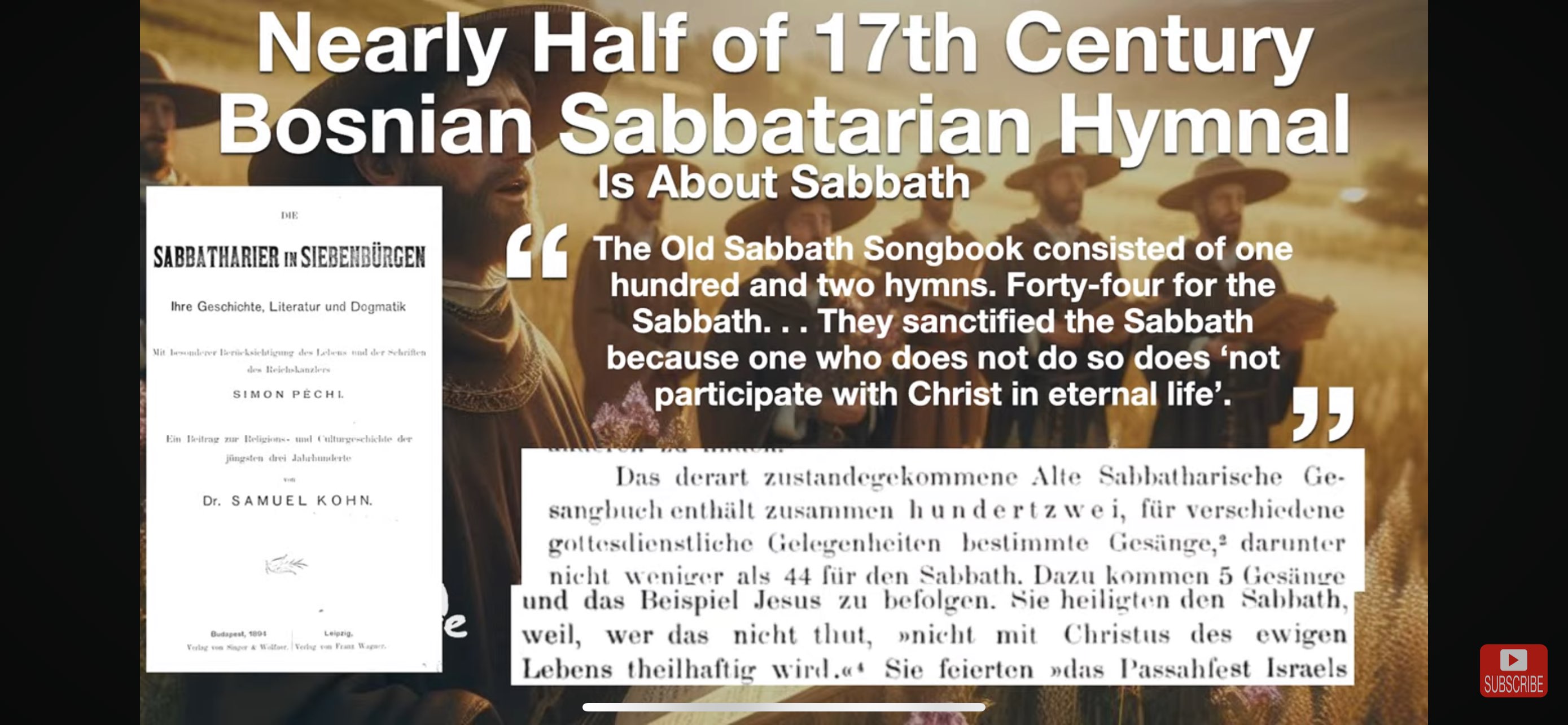
17th Century — Bosnian Sabbatarian Hymnal
In the mountains of Siebenburgen (Transylvania), documented by Dr. Samuel Kohn in Die Sabbatharier in Siebenburgen (Budapest, 1894), Sabbatarian communities composed hymnals that reveal the depth of their devotion to God's holy day:
"The Old Sabbath Songbook consisted of one hundred and two hymns. Forty-four for the Sabbath... They sanctified the Sabbath because one who does not do so does 'not participate with Christ in eternal life.'"
— Dr. Samuel Kohn, Die Sabbatharier in Siebenburgen, Budapest, 1894
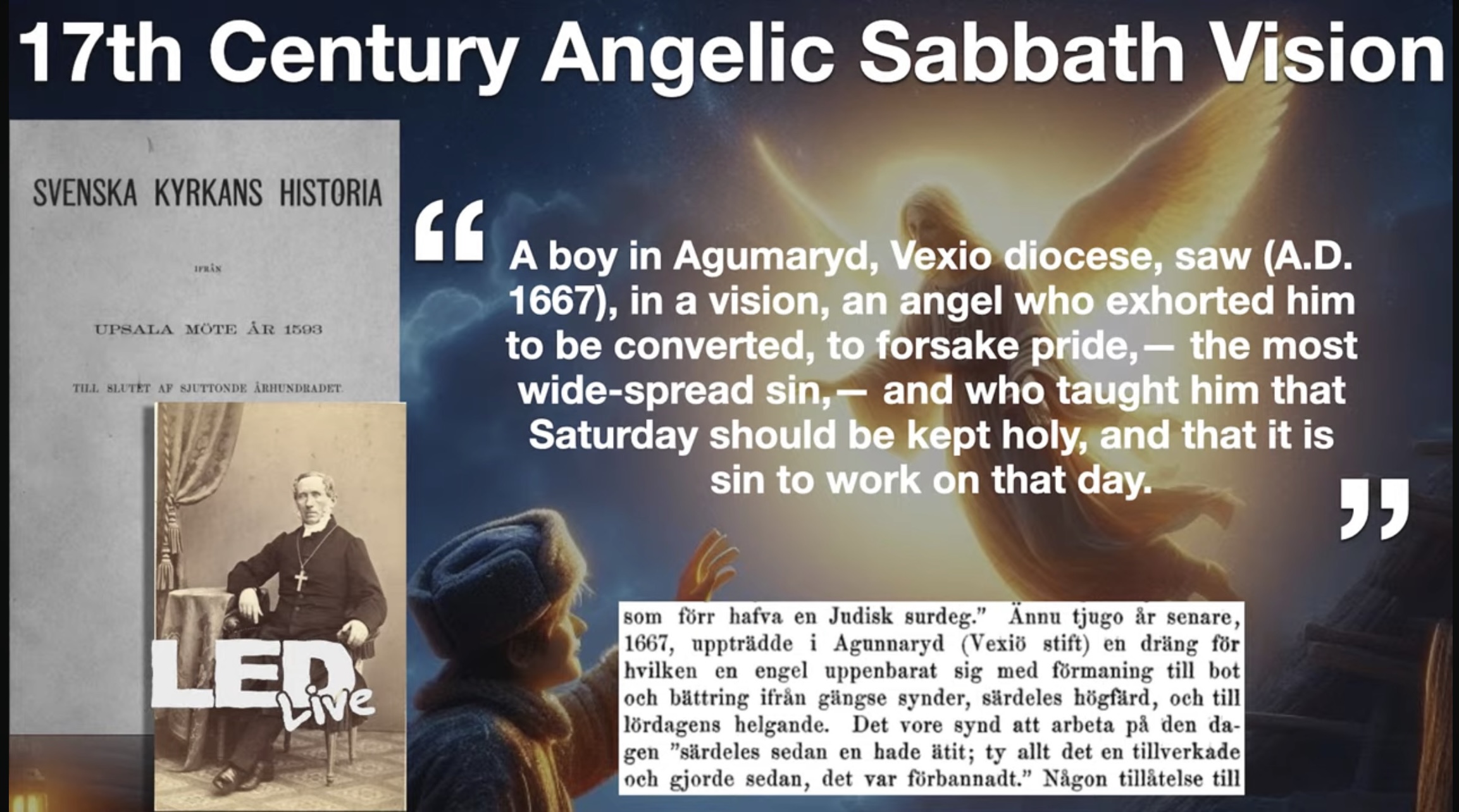
A.D. 1667 — Angelic Sabbath Vision in Sweden
Recorded in Svenska Kyrkans Historia (History of the Swedish Church), a remarkable account tells of a young boy in Agumaryd, Vexio diocese, who received a divine visitation:
"A boy in Agumaryd, Vexio diocese, saw (A.D. 1667), in a vision, an angel who exhorted him to be converted, to forsake pride—the most wide-spread sin—and who taught him that Saturday should be kept holy, and that it is sin to work on that day."
— Svenska Kyrkans Historia (History of the Swedish Church)
The Warning of History
These faithful witnesses—burned in cages, imprisoned in dungeons, martyred for their faith— testify that the conflict over God's Sabbath is not new. For centuries, Rome has persecuted those who kept the seventh day. The same spirit that burned the Waldenses, that imprisoned John Traske, that executed the Russian Sabbatarians, is rising again.
What has happened will happen again. The question is: on which side will you stand?
Part 7: What Scripture Actually Says
Let us return to the Word of God and examine what it actually teaches about the Sabbath:
At Creation
"And on the seventh day God ended his work which he had made; and he rested on the seventh day from all his work which he had made. And God blessed the seventh day, and sanctified it: because that in it he had rested from all his work which God created and made."— Genesis 2:2-3 (KJV)
At Sinai
"Remember the sabbath day, to keep it holy. Six days shalt thou labour, and do all thy work: But the seventh day is the sabbath of the LORD thy God: in it thou shalt not do any work... For in six days the LORD made heaven and earth, the sea, and all that in them is, and rested the seventh day: wherefore the LORD blessed the sabbath day, and hallowed it."— Exodus 20:8-11 (KJV)
In Isaiah's Prophecy
"If thou turn away thy foot from the sabbath, from doing thy pleasure on my holy day; and call the sabbath a delight, the holy of the LORD, honourable; and shalt honour him, not doing thine own ways, nor finding thine own pleasure, nor speaking thine own words: Then shalt thou delight thyself in the LORD..."— Isaiah 58:13-14 (KJV)
In Christ's Teaching
"Think not that I am come to destroy the law, or the prophets: I am not come to destroy, but to fulfil. For verily I say unto you, Till heaven and earth pass, one jot or one tittle shall in no wise pass from the law, till all be fulfilled."— Matthew 5:17-18 (KJV)
In Eternity
"For as the new heavens and the new earth, which I will make, shall remain before me, saith the LORD, so shall your seed and your name remain. And it shall come to pass, that from one new moon to another, and from one sabbath to another, shall all flesh come to worship before me, saith the LORD."— Isaiah 66:22-23 (KJV)
The Sabbath spans the entire scope of Scripture—from Creation to the New Earth. It was not abolished at the cross; Christ Himself rested in the tomb on the Sabbath. It will not be abolished in eternity; Isaiah tells us we will keep it forever.
An Invitation to Return
Dear reader, this is not about condemning anyone. Many sincere Christians have observed Sunday in good faith, never knowing the history we have traced here. God judges us by the light we have received, not by what we never knew.
But now you do know. And with knowledge comes responsibility.
"And the times of this ignorance God winked at; but now commandeth all men every where to repent."
— Acts 17:30 (KJV)
The Sabbath is not a burden—it is a gift. It is a weekly reminder that we belong to the Creator, not to any earthly power. It is a sign of our allegiance to the God who made heaven and earth.
The obelisk still stands in Rome, crowned with a cross. Sun worship still masquerades in Christian dress. But the Word of God remains unchanged:
"Remember the sabbath day, to keep it holy."
— Exodus 20:8 (KJV)
Like Solomon, will we ask for wisdom? God will give us what we need if we are willing to put everything on the line and say: "Lord, here am I, send me."
"If any of you lack wisdom, let him ask of God, that giveth to all men liberally, and upbraideth not; and it shall be given him. But let him ask in faith, nothing wavering. For he that wavereth is like a wave of the sea driven with the wind and tossed. For let not that man think that he shall receive any thing of the Lord. A double minded man is unstable in all his ways."
— James 1:5-8 (KJV)
"It is time for thee, LORD, to work: for they have made void thy law. Therefore I love thy commandments above gold; yea, above fine gold. Therefore I esteem all thy precepts concerning all things to be right; and I hate every false way."
— Psalm 119:126-128 (KJV)
Here is our promise:
"And they that be wise shall shine as the brightness of the firmament; and they that turn many to righteousness as the stars for ever and ever."
— Daniel 12:3 (KJV)
Look at the mirror. Look at the perfect standard of righteousness and ask yourself:"LORD, am I walking in your footsteps?"
"The Son of Man is Lord of the Sabbath."
Will you follow Him?

